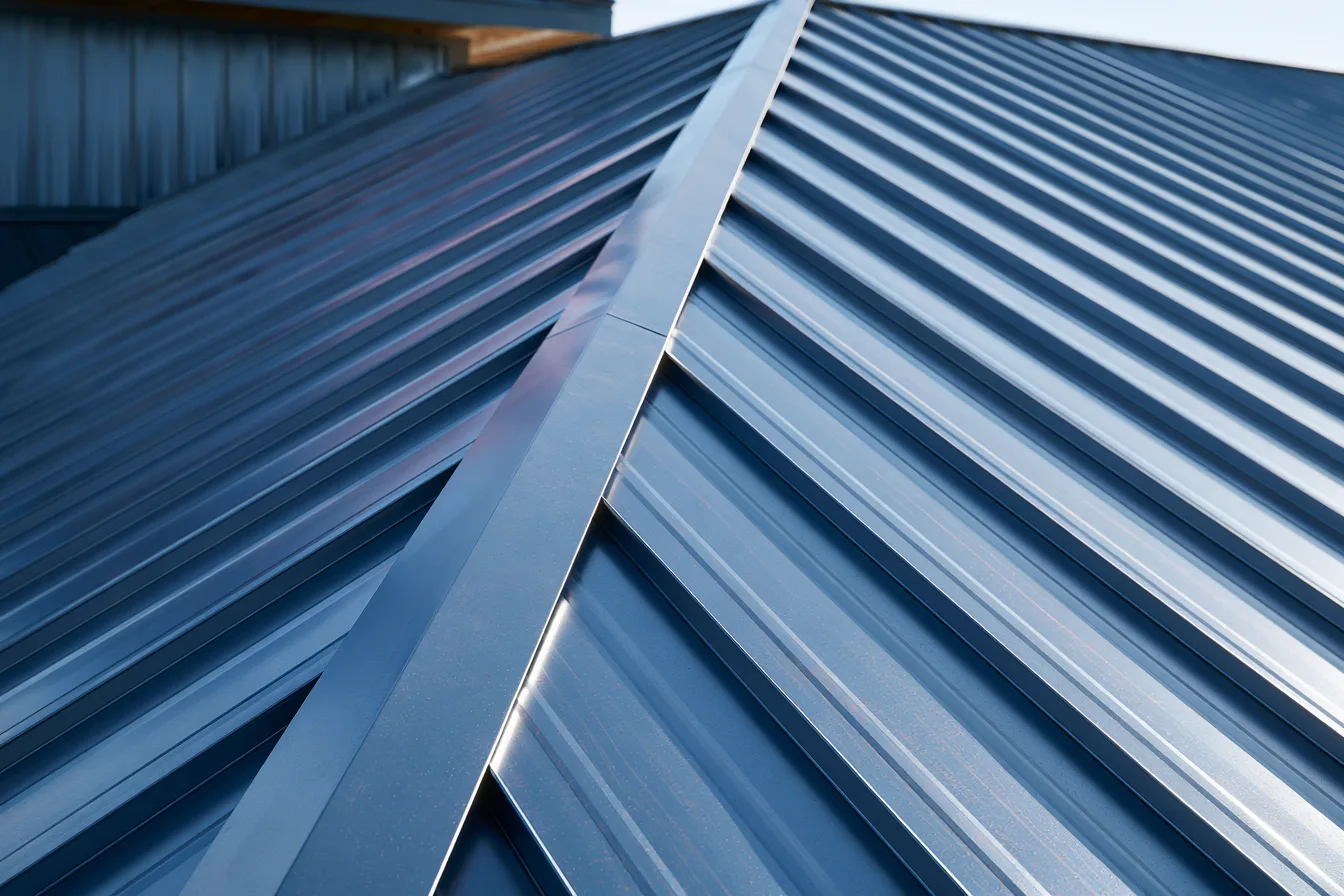
Metal roofing in Lawton, OK
Metal roofing brings the panels, fasteners and roof details into one decision. Whether you’re considering a new metal roof or dealing with a leak in an existing one, we’ll help you look beyond the panel finish.
Metal roofing is a system of panels and connections
A metal roof has long surfaces that move as temperatures change. The way the panels are attached and joined needs to accommodate the chosen system. A detail that works at one seam or slope is not automatically right for another roof.
Standing-seam systems conceal much of their attachment beneath or beside raised seams; exposed-fastener panels have visible screws through the panel. Those differences affect appearance, inspection and the places that need maintenance. Neither label means the roof can be installed without attention to the base, edges and penetrations.
A house and an occupied commercial building can also have different support, insulation and condensation-control arrangements. The roof system has to fit the building below it, including its slope and the way water leaves the surface.
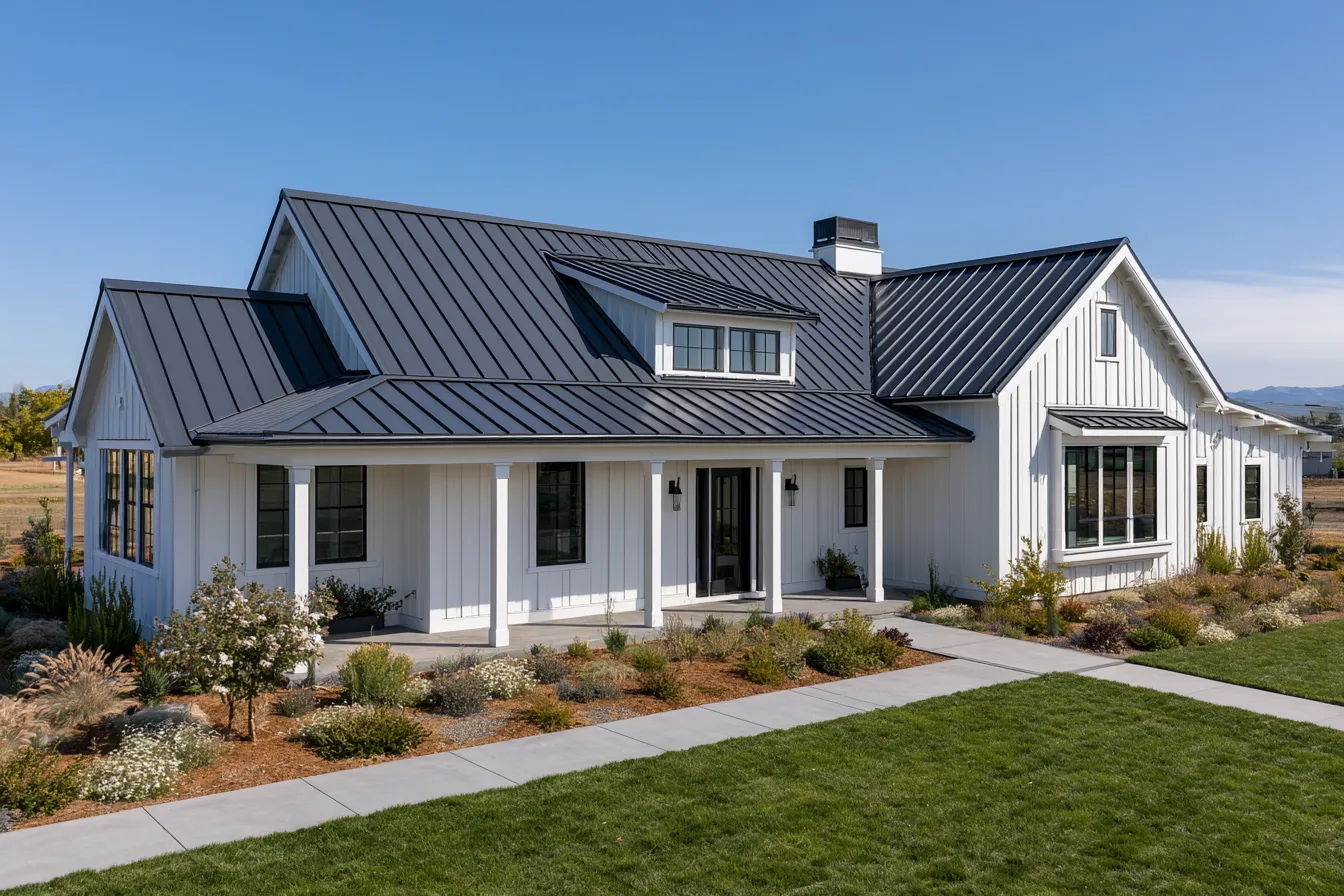
Metal roofing choices for Lawton properties
| System feature | Standing seam | Exposed fasteners |
|---|---|---|
| Attachment | Concealed clips or fastening flanges depend on the exact panel system. | Fasteners pass through the panel and rely on an appropriate sealed connection. |
| Movement | Many clip systems allow panel movement; fixed points and details still matter. | Thermal movement places demands on fasteners, holes and surrounding connections. |
| Inspection | Seams, clips where accessible, edges and penetrations need attention. | Fastener condition, washers, panel laps and penetrations are important inspection points. |
| Slope and appearance | Raised seams create long vertical lines; minimum slope depends on the product and seam. | Panel profiles and permitted slopes vary; do not choose by appearance alone. |
McElroy Metal’s panel comparison explains the attachment and movement distinction. The selected panel’s instructions govern the actual installation.
Repairing an existing metal roof
A leak can begin at a fastener, a panel lap or a penetration without requiring every panel to be replaced. The repair needs to establish whether the surrounding material, attachment and supporting surface remain sound.
Replacing a screw without understanding an enlarged hole or loose substrate can leave the same weakness. Similarly, coating a moving or poorly formed joint will not create the connection the system needs. Corrosion and damaged panels may require material replacement before any restoration is considered.
For a commercial roof being considered for restoration, roof coatings explains why sound material, compatibility and preparation come before the finish coat.
Start with the source of the leak
Fasteners and laps
Condition, alignment and sealing matter at each connection through or between panels.
Roof penetrations
Pipe and equipment details must suit both the roof profile and its movement.
Corrosion and supporting material
A surface treatment cannot restore missing metal or a weakened base.
Planning a metal roof replacement
Choose the assembly for the building
The support below the roof, slope, roof shape and expected use help determine the suitable panel system. Weight and structural requirements need consideration when changing materials, rather than assuming every existing roof is ready for the same upgrade.
Coordinate moisture and ventilation
Condensation beneath metal is a building-assembly issue. Insulation, air movement and vapor control need to work with the selected roof design. An interior moisture problem should not automatically be treated as rain entering through a panel.
Detail the edges and interruptions
Ridges, eaves, valleys, walls and penetrations need matching system details. Accessories, fastener compatibility and drainage affect performance just as much as the visible field panels.
Plan installation and later access
Panel handling, equipment access and the building’s activity shape the work. Future rooftop trades should have suitable access routes and avoid making unplanned holes or incompatible repairs in the new system.
Lawton metal roofing FAQs
Is a metal roof maintenance-free?
No. Exposed fasteners, sealants, penetrations, debris and drainage all need attention. Appropriate maintenance depends on the panel system, manufacturer instructions and the condition of the roof.
Can metal roofing go on a low-slope roof?
Some systems are designed for low slopes, while others are not. Seam design, panel profile and the manufacturer’s minimum slope matter. A panel that works on a steep home roof should not be assumed suitable for a nearly flat addition or commercial building.
Will metal roofing make the house noisy?
The assembly below the panel matters. A roof over a solid deck and insulated living space behaves differently from an open structure with bare panels.
Does hail mean a dented metal roof must be replaced?
Not necessarily. Dents can be an appearance issue or part of damage that affects seams, coating or drainage. The assessment needs to distinguish those conditions. Policy treatment of cosmetic damage is also separate from the roofing repair decision.
Discuss metal roofing for your property
Tell us about the existing roof and whether you’re considering repair or a material change. We’ll help you begin with the system the property needs.
- Free roof inspections
- Help with repair and replacement
- Questions about your roof welcome