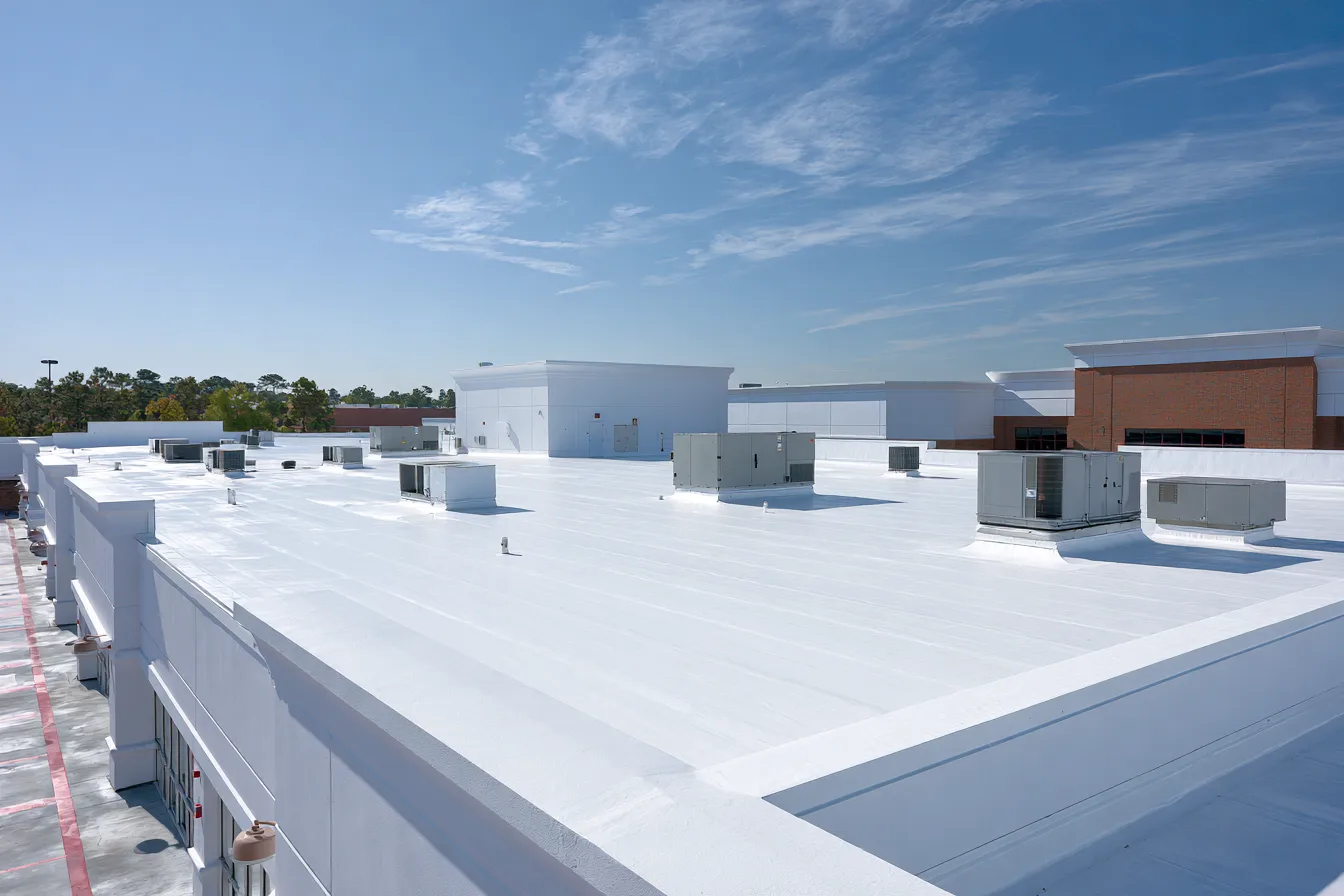
TPO roofing in Lawton, OK
A TPO roof needs dependable seams, flashings and support beneath the membrane. For a leak, an aging roof or a replacement project in Lawton, we’ll help connect the visible condition to the work the building needs.
TPO roof repairs depend on a sound weld and base
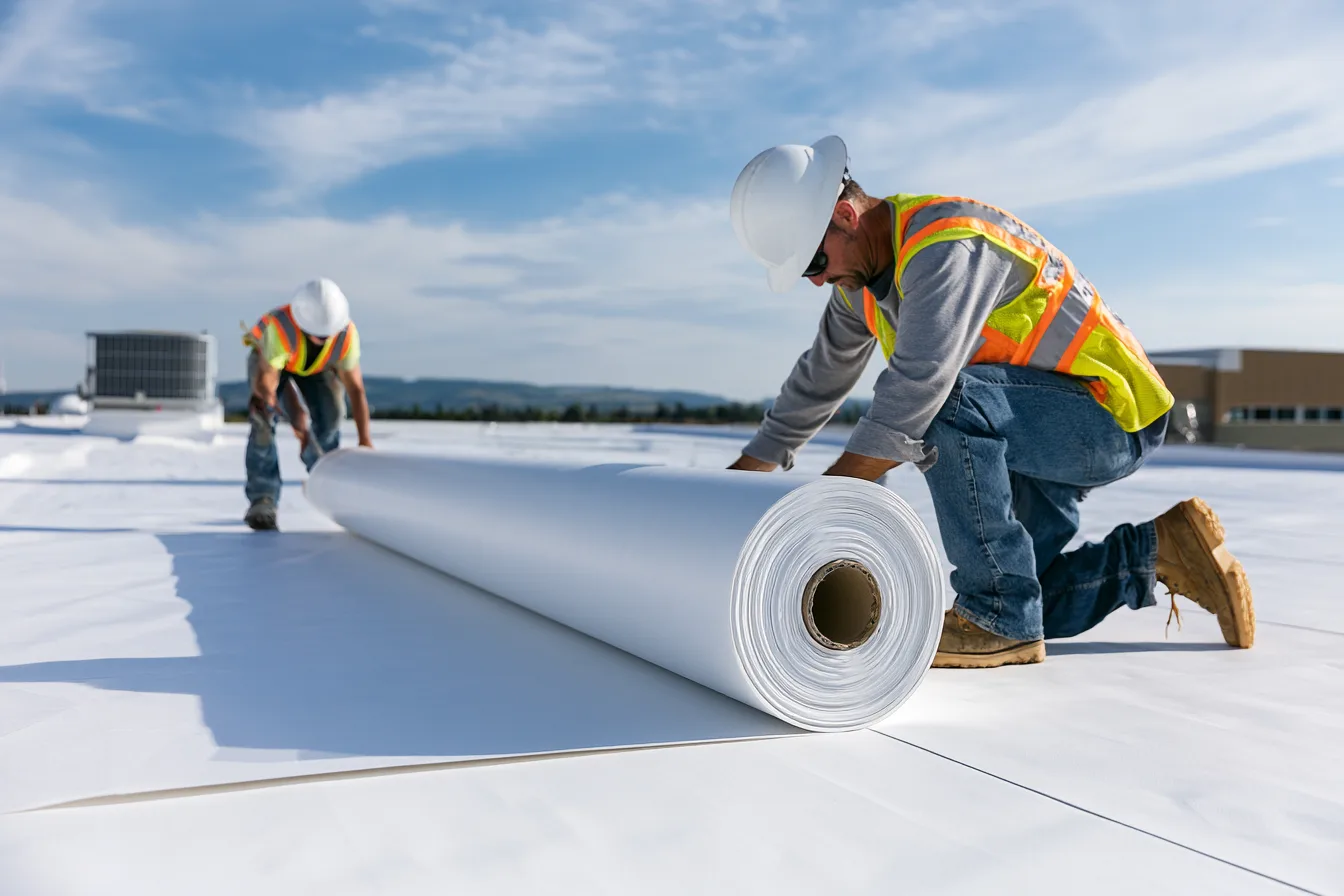
TPO is a thermoplastic single-ply roof membrane. Its sheets and compatible details are joined using heat-welded connections. That makes the condition of the joining surfaces important when a puncture, seam or flashing is repaired.
A patch has to suit the existing membrane and join to material that can accept the repair. Dirt, surface weathering or an incompatible previous coating can complicate that connection. Covering a leak with an unrelated roofing cement does not make it a TPO system repair.
The material below also matters. If water has entered the insulation or weakened the supporting layers, welding over the surface alone leaves that condition in place. We start with the leak and the assembly around it, not just the white sheet you can see.
Where a Lawton TPO inspection concentrates
The broad field of membrane is only part of a TPO roof. Each edge, drain and piece of rooftop equipment interrupts that field. Those details need to stay connected while the building and roofing experience movement, weather and service traffic.
The location of water indoors helps establish an investigation area, but it does not prove that the opening sits directly above it. Water can travel within the roof assembly. A useful assessment connects the leak history with the accessible seams, penetrations and supporting condition.
Look at the interruptions in the membrane
Seams and patches
Open edges, disturbed areas and previous repairs need compatible connections to sound membrane.
Curbs and terminations
Equipment flashings and perimeter attachments have to carry the roof surface up or finish it securely.
Drainage and traffic
Outlets, walk paths and places where rooftop trades work can affect both exposure and damage.
Repair or replace a TPO roof
| Finding | Useful direction | Limit to settle |
|---|---|---|
| A localized puncture or seam defect | A compatible membrane repair joined to a prepared, sound surface. | Check the layers beneath and the condition around the opening. |
| Wet insulation or damaged support | Remove affected material and rebuild a dry, sound assembly before closing it. | The wet area can extend beyond the visible leak or patch. |
| Widespread attachment or membrane failure | Compare a larger rehabilitation or replacement scope. | A series of small patches will not correct a failing roof assembly. |
| An aging but sound roof | Evaluate repair, continued service or a compatible restoration system. | Check moisture, attachment and compatibility with the proposed restoration system. |
If restoration is being considered, read the roof coating requirements before treating a new finish as a solution for wet or loose roofing.
Installing or renewing the TPO assembly
For a larger project, the membrane choice needs to fit the support, attachment and drainage design. The building’s occupied areas should be part of that planning from the beginning.
Understand the existing layers
The deck, insulation, old coverings and moisture condition determine whether materials can remain or need removal. A recover is a design choice with structural, attachment and code limits, not an assumption that another sheet can go over anything.
Plan insulation and water flow
Insulation thickness, cover boards where required and tapered arrangements can affect the finished surface. Drain and scupper details must connect to the roof’s route for water. New membrane alone does not change a low area’s slope.
Specify the attachment and details
Mechanically attached and adhered systems have different requirements. Edges, seams, penetrations and equipment curbs need details that belong to the chosen assembly. Manufacturer instructions and any specified warranty conditions must agree with the installed system.
Coordinate work with building use
Roof access, deliveries, air intakes and sensitive rooms below can affect phasing. Future equipment service also needs a way across the roof that protects the membrane and keeps unplanned penetrations out of it.
Lawton TPO roofing FAQs
Can an older TPO roof still be repaired?
Often a localized repair can be considered, but the joining surface and remaining membrane must be suitable. The assessment needs to identify the product, contamination, prior coatings and supporting condition. Age by itself does not prove that a repair will weld reliably or that replacement is necessary.
Can a leaking seam just be coated?
A seam failure needs its own repair. Some restoration systems permit coating over qualified TPO, with specific cleaning, adhesion testing and detail preparation. Wet insulation or loose material must be addressed first. A finish coat is not a substitute for restoring the seam and base.
How does rooftop equipment affect a TPO roof?
Equipment creates curbs, pipes and service traffic. Dropped tools, unplanned fasteners and changes around an air-conditioning unit can disturb an otherwise sound roof. Coordinating the equipment work and roof detailing helps keep one trade’s work from opening another leak path.
What warranty comes with TPO roofing?
Coverage depends on the manufacturer, assembly and actual project terms. Product coverage, a system guarantee and installation workmanship are different commitments.
Our roof warranty guide explains the questions to settle with the actual issuer and installing contractor.
Arrange a closer look at the TPO roof
Tell us about the building, the leak or the replacement you are planning. We’ll help start with the membrane and the assembly beneath it.
- Free roof inspections
- Help with repair and replacement
- Questions about your roof welcome