Damage below the opening
A branch can break decking as well as shingles. Long-running entry can weaken wood beneath a much smaller visible defect. The roof covering cannot restore the strength of that supporting material by itself.
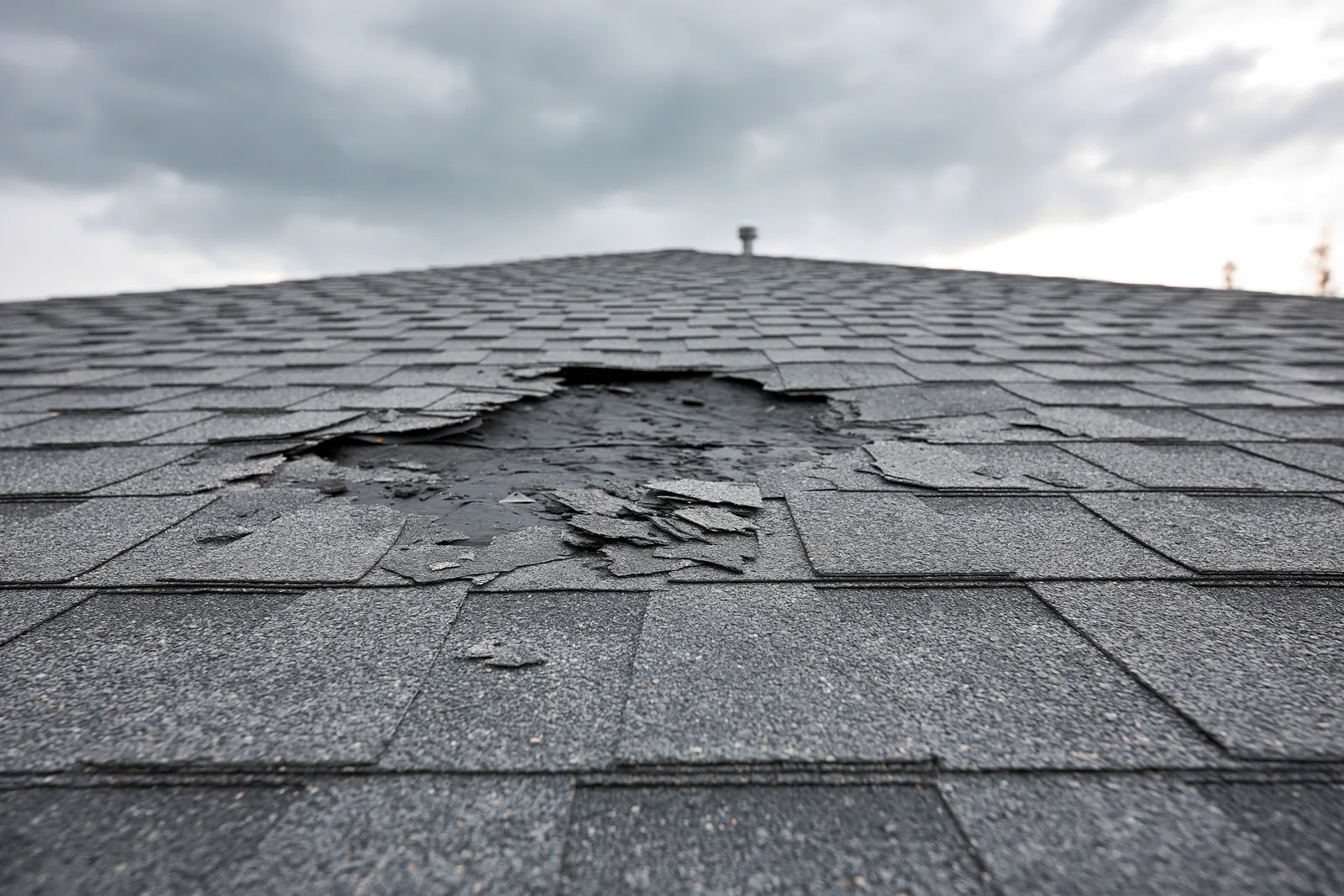
Water coming in or a newly exposed roof opening deserves a clear first conversation. Call Lawton Roofing and say what is happening now. Stay away from an unsafe ceiling, electrical hazard or wet roof while help is arranged.
An urgent roof problem is about the present exposure. Water entering a room, a limb through the covering or missing roofing over bare wood can put more of the building at risk with further rain. A small ceiling stain may come from an opening some distance away, so its size does not tell the whole story.
Keep people away from sagging ceilings and water near lights, outlets or electrical equipment. If there is an immediate danger, contact the appropriate emergency service or utility. Roofing work cannot make an electrically unsafe room or unstable structure safe by itself.
When you call, say whether water is entering, whether the roof appears open and whether debris is involved. You do not need to go onto the roof to provide useful information.
Active water and an exposed opening are different from an old dry stain.
Describe the affected room or roof edge from a safe place, and give the property address.
Mention fallen branches, blocked entrances or hazards that may affect safe work.
Temporary protection limits further weather entry while the permanent repair is worked out. It may involve covering an exposed area, but the right approach depends on the opening, the roof surface and where the covering can be secured safely.
A tarp is not a finished roof. Wind can move it, its attachment can affect the existing covering, and water can enter around an incomplete edge. A wet or damaged roof may also be unsafe to access when protection is most wanted. Conditions determine what can be done.
Once access is safe, the roof still needs a permanent connection: usable supporting material, appropriate underlayment and covering, and correctly tied-in flashings. Leaving a temporary cover in place does not settle those details.
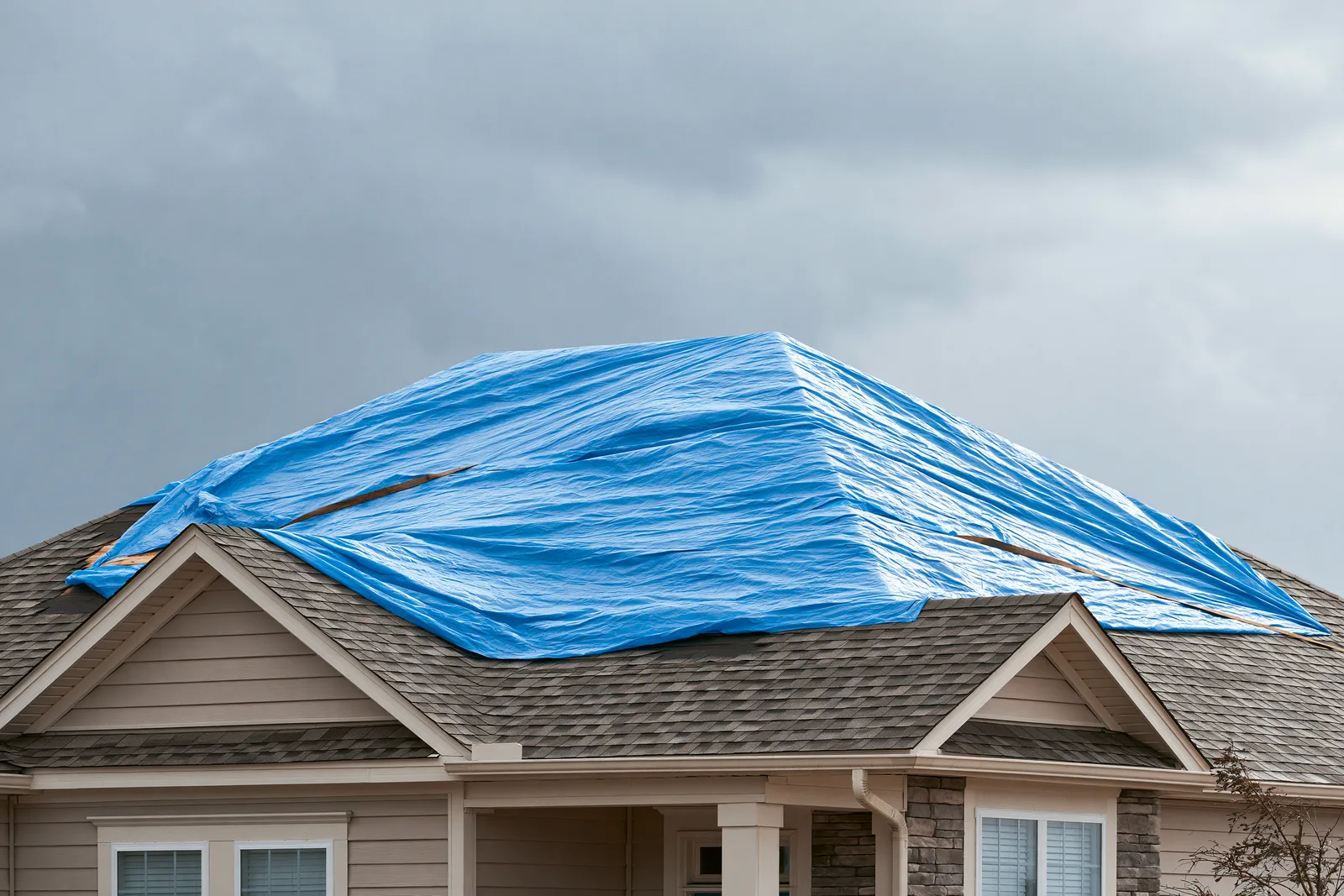
The assessment follows the likely water path and the area around the visible failure. Interior water may have traveled along the deck or framing. The repair needs to reach the roof entry, not simply the stain below it.
Damaged covering and supporting material in the work area need attention. Where nearby shingles cannot be lifted intact, the scope may have to extend to a workable stopping point. Punctured or wet low-slope roofing needs a compatible system repair.
The permanent covering must join into the surrounding roof and its drainage path. Temporary attachment points also need to be dealt with. Interior drying, electrical repairs or structural work may remain separate from the roofing scope.
A branch can break decking as well as shingles. Long-running entry can weaken wood beneath a much smaller visible defect. The roof covering cannot restore the strength of that supporting material by itself.
Large areas of shingle loss or repeated openings can change a focused repair into replacement work. The decision should follow the condition of the remaining roof, not the urgency of the first call.
Understand permanent roof repairAccess, weather, the type of damage and current availability affect the next step. Call and explain the immediate condition so the request can be understood.
Do not climb onto a wet, damaged or unstable roof. Temporary protection requires safe access and appropriate attachment, and incorrect fastening can create more damage. Stay clear of roof hazards while the condition is assessed.
No. A failed pipe flashing or a limited damaged area can sometimes be repaired. Replacement becomes relevant when the surrounding material, supporting layers or extent of damage will not support a useful localized repair.
Avoiding further damage and determining insurance coverage are separate issues. Notify your insurer promptly and follow its policy instructions while keeping safety first. Keep records of emergency work and any existing photos you can obtain safely.
Our roof insurance guide explains why a necessary repair does not by itself establish a covered payment.
Give the property location and explain the current roof condition. Stay clear of the affected area if there is a safety concern.