Surface marks and appearance
A dent in a metal accessory can show that something struck it, but its appearance does not establish whether that part leaks or whether neighboring shingles failed. The location and function of the affected part matter.
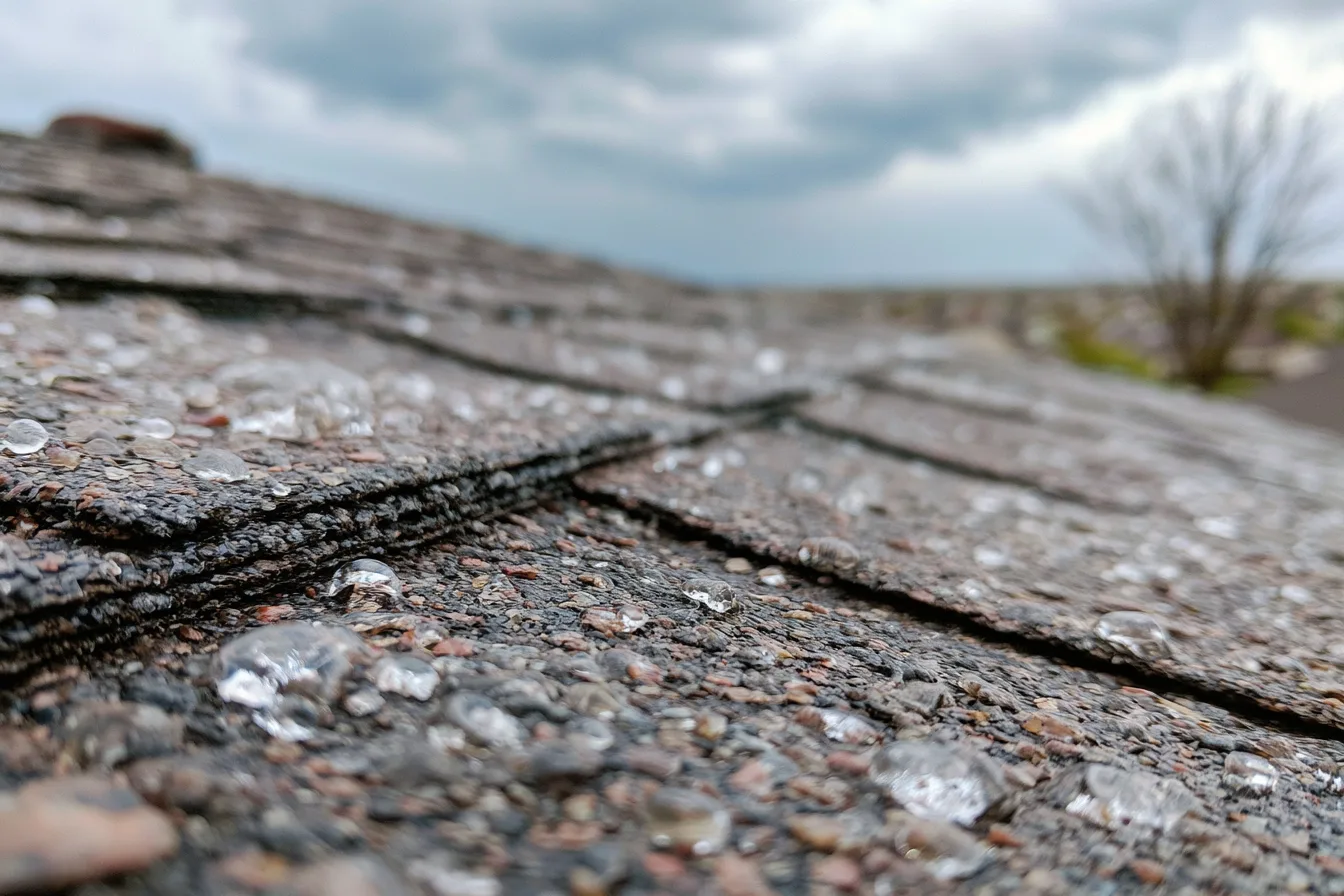
Hail can leave obvious marks without answering how much roofing needs work. A free inspection helps separate the surface signs, the roof’s existing condition and the repair that will keep water out.
An asphalt shingle has more to it than the granules on top. An impact can affect the supporting mat beneath that surface, while other marks may reflect wear, handling or a different cause. A visible spot needs a closer look before it becomes a roofing decision.
Hail size is useful weather information, but it is not a universal damage threshold for every roof. The material, its condition and how it was struck matter. We look at the covering and its connections rather than treating a reported hail diameter as an automatic replacement recommendation.
The inspection also needs to distinguish the current concern from existing deterioration. A roof can have both. That distinction helps explain the repair, and it keeps the roofing assessment separate from the insurer’s decision about a particular loss.
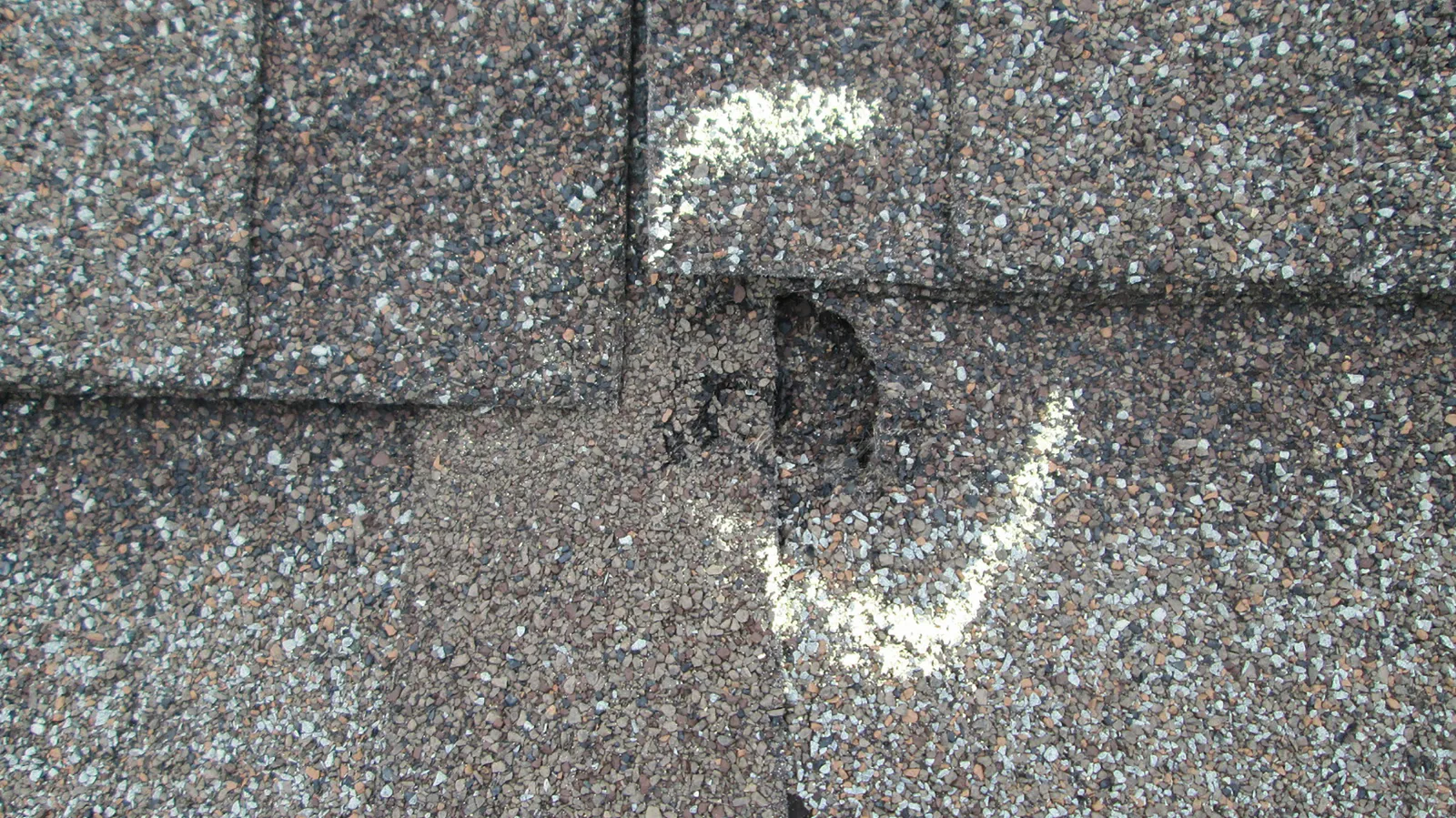
A dent in a metal accessory can show that something struck it, but its appearance does not establish whether that part leaks or whether neighboring shingles failed. The location and function of the affected part matter.
A fractured shingle, punctured membrane or opened connection needs attention to the way water is kept out. The work should address that failure and reconnect to usable material around it, including any layers affected below.
Brittle shingles, loose granules and old repairs can complicate an assessment. We distinguish that existing wear from damaged material that needs repair.
A limited repair depends on having surrounding roofing that can be handled without breaking and a compatible way to make the new connection. Repairing one shingle can require releasing fasteners in adjacent courses. The visible mark and the actual work area are not necessarily the same size.
Accessories need their own judgment. A damaged vent, pipe flashing or ridge cap can call for different work from a damaged field shingle. If failures are extensive, or if opening the remaining roof causes it to break, a broader replacement discussion may be more useful than isolated patches.
When a roof is being replaced, impact-rated shingle options may be worth considering. A tested rating adds information about the product; it does not make the installed roof hail-proof or establish a future claim payment.
A concentrated affected area differs from damage across several slopes and details.
The repair needs workable roofing around it and a sound supporting base.
Flashings, vents, caps and other interruptions should be included where their condition requires it.
You can start with the concern and when you noticed it. We’ll help connect that information to the physical roof decision.
A roof walk examines the covering and details where access is safe. Any interior water or exposed opening changes the immediate priority.
The proposed work needs to explain the parts affected and whether the remaining covering can accept a durable repair. Temporary protection may be needed first if the roof is open to rain.
Repair and replacement are different commitments. The contractor’s scope should address materials, supporting repairs and the connection to the remaining roof. Insurance coverage remains a separate policy question.
Yes. A damaged covering or connection may not let water into a room immediately. The layers beneath it can delay a visible symptom. That does not mean every hail mark is a failure; an inspection helps distinguish the two.
No. The classification describes performance in a specified impact test. It is not a guarantee against every natural hailstorm. Product warranty wording and any insurance discount have their own conditions, so those questions belong with the exact shingle and policy.
A report helps establish what was recorded at a place and time. It does not date a mark on an individual roof, and two reports do not necessarily mean two separate storms.
See the carefully scoped Lawton weather records for an example of how the evidence can be used.
Your insurer applies your policy. The roofing assessment concerns the roof’s condition and the work it needs.
The roof insurance guide explains the roles and the terms that can change a roof payment.
Tell us about the property, the hail concern and any water you have noticed. A free inspection is a practical place to begin.