Exposed-fastener or standing-seam metal roofing?
Two metal roofs can have similar colors and ribs while relying on different connections. One shows rows of screws through the panels; another hides its attachment beneath raised seams. That difference matters when choosing a new roof and when deciding how to care for one already on a Lawton home or commercial building.
The useful choice starts with the roof’s shape, the panel system and the work needed to keep its joints sound. Appearance belongs in that decision, alongside installation cost and future upkeep.
Ask about your roofTwo ways to hold a metal roof in place
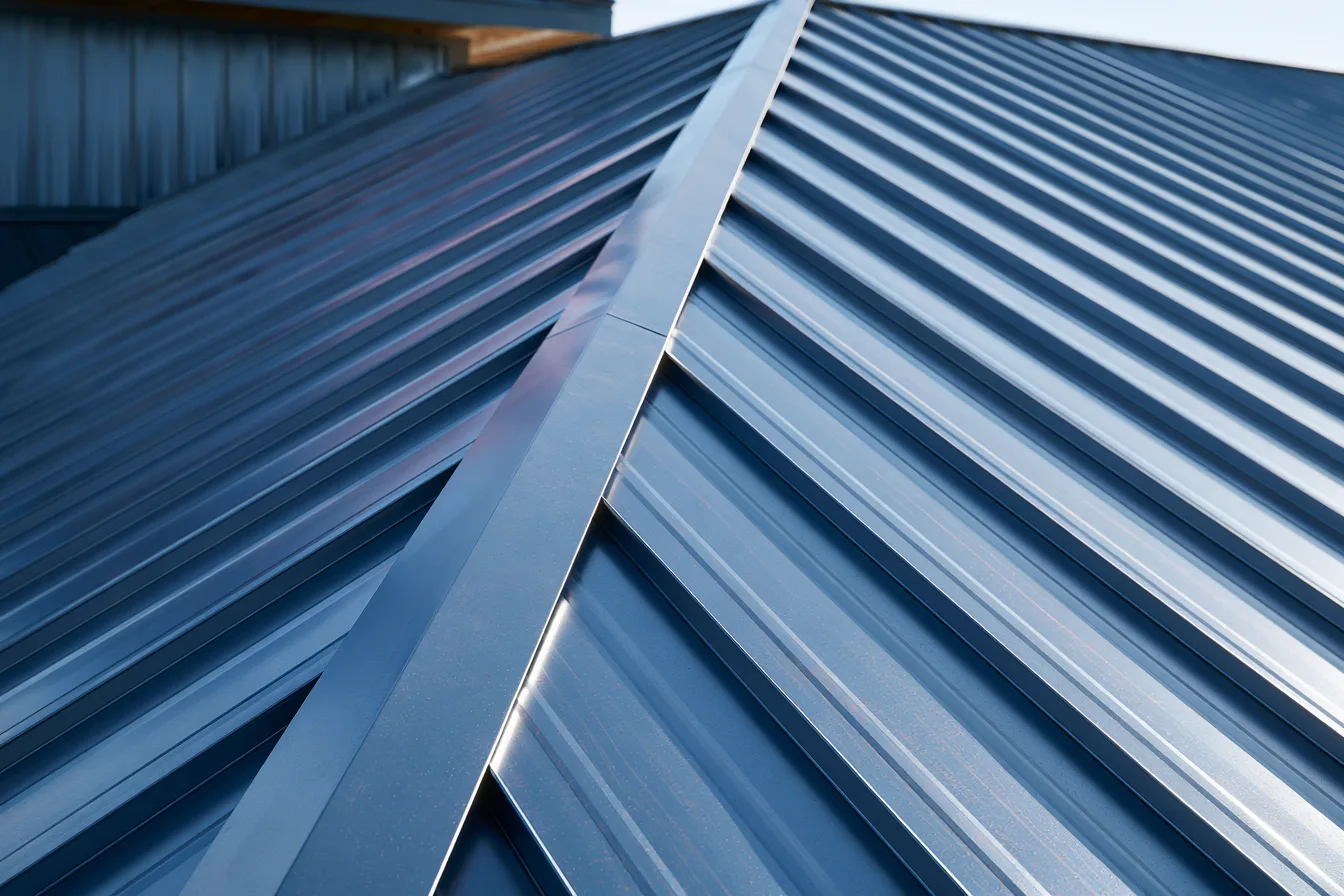
An exposed-fastener roof uses screws through the face of the panel. Sealing washers close the openings around those screws. Their fit matters: a tilted screw or a washer squeezed too hard does not form the intended seal. The visible screw pattern is part of this roof’s appearance and part of what an inspection checks.
Standing seam describes the raised joints between panels. The attachment is concealed, often with clips beneath those joints. Some profiles use a concealed fastening flange instead. Snap-together and mechanically seamed products also differ, so “standing seam” identifies a family of systems rather than one interchangeable detail.
McElroy Metal’s standing-seam system guide shows that range of profiles and attachment approaches. The exact system determines how its seams, clips and perimeter connections are installed.
Movement changes what the connections need
Metal expands as it warms and contracts as it cools. Longer panels have more movement to accommodate. Clip systems can allow that movement within their designed arrangement; through-fastened panels are restrained at the screws. Repeated movement can stress the openings and attachment.
This makes the length and layout of the panel runs a real selection question. It also explains why a loose fastener needs more than a casual turn of a screwdriver: the condition of the hole, washer and supporting material changes the repair.
The manufacturer’s concealed-versus-exposed fastening guidance explains these movement and sealing differences. They are reasons to match the system to the building, not a universal rule that visible screws make a roof unsuitable.
The panel profile must fit the roof
A low slope, a long open roof plane and a roof broken up by valleys ask different things of the covering. The panel’s approved slope, support and joining details need to fit that geometry. Changing from shingles to metal does not remove the need to resolve water paths at walls, valleys and roof penetrations.
For example, McElroy’s Max-Rib specifications distinguish installation conditions with and without specified sealant. This is a product-specific requirement. Another panel can have a different minimum slope or joining detail.
The coating and base metal also deserve their own decision. A color sample describes appearance; it does not establish the attachment, corrosion protection or warranty for the complete roof. Those details stay connected to the selected product and installation.
Plan for care as well as installation
Concealed attachment does not make the entire roof maintenance free. Flashing at a pipe or wall, panel joints, drainage and surface damage still need attention. On an exposed-fastener roof, accessible screw heads and washers add visible connections to that inspection. Safe roof access and the product instructions determine how the work is carried out.
A repair also has to suit the connection. Spreading a patch over the surface can leave the original joint unresolved. McElroy’s roof maintenance manual describes rebuilding leaking metal joints with the proper sealant between the metal layers, and evaluating punctures individually. An affected panel sometimes needs replacement.
Its roof owner maintenance manual also explains why keeping drainage open and checking damage matter. The roof’s condition and its manufacturer’s instructions guide the repair and care plan.
Choose from the building and the work
A simpler panel layout can make exposed-fastener roofing a practical option where the roof and product requirements fit. Standing seam involves different panel handling, joining and attachment work. The price needs to cover that actual system, removal, supporting repairs, flashing and site access. A generic metal-roof price cannot settle the comparison.
For an existing roof, the first question is whether its present connections and surrounding material can accept a lasting repair. A leak at one detail does not by itself mean the whole covering needs replacement. Wider deterioration changes that discussion.
Our metal roofing service explains inspection, repair and replacement planning for Lawton properties. Tell us whether you are choosing a new covering or dealing with an existing metal roof. We can start with a free inspection and the conditions on your building.